Welcome to Grace Church
Serving God in Jasper County since 1869


A Beginner's Guide to The Episcopal Church


This section is aimed at people who've never been inside an Episcopal Church, or who are entirely new to Christianity.  Perhaps you've walked past a church and wondered what goes on inside, or perhaps you've heard a lot about Christianity from the media and you're wondering if what you've heard is even remotely accurate. A lot of it isn't. The extremists at both edges get most of the publicity, while The Episcopal Church sits firmly in the middle of the spectrum on pretty much every major issue. This page isn't meant as a comprehensive guide to Christian belief. It's intended to give you some background information so that - we hope - you'll feel comfortable enough to come along to a church service and begin finding out more about us. We welcome visitors; coming along for a look doesn't commit you to anything. Oh, by the way – in this document, we’re going to use two words, “Anglican” and “Episcopal,” as interchangeable.


Introduction

The Anglican Communion of local Churches is one of the most important Christian denominations worldwide, with about 100 million members.  About 2 ½ million Americans are members of The Episcopal Church, the American member of the Anglican Communion. The oldest continuously functioning Church in the USA, Episcopalians have been worshiping in this country since the foundation of the Jamestown colony in Virginia in 1607, which was an entirely Anglican affair. During the colonial era, Anglicans were perhaps the largest denomination in the country, but lost many members during the Revolution, in which a significant number of Anglicans remained loyal the British cause and left the country for Canada, Bermuda or other areas. Nevertheless, many of the country’s founders – Ben Franklin, Thomas Jefferson, George Washington, Paul Revere, Patrick Henry, Madison, Monroe, Hamilton, all those people you have heard were “godless deists” – were faithful members of The Episcopal Church who regularly attended service, served on parish vestries (administrative boards) and found spiritual strength in the words of the Book of Common Prayer and the distinctive Anglican approach to living biblical Christian lives.  


Much of Anglican worship, like that of other churches, is based on traditions stretching back centuries.  The Episcopal Church welcomes new members, but faces a serious difficulty; to a newcomer, much of what we do in church looks puzzling or entirely incomprehensible. We take Paul’s words about doing things “decently and in order” pretty seriously – worship is anything but “made up on the spot.” Centuries of thought and prayer have gone into putting together some beautiful, and we believe true, words of prayer: centuries of devotion have gone into customs and ceremonies which are beautiful, and we believe helpful. 

   
The most vocal Christians are often members of relatively small bodies which are particularly important in the USA, and so the general public view of Christianity is not necessarily accurate. For instance, you can rest assured that there won’t be any snake-handling at an Episcopal service, nor will you be subjected to a lengthy sermon about who to vote for. No one will check out your political or social perspective before letting you in. It is important to remember that worldwide, over 80% of the world’s Christians belong to one of the four major “liturgical” traditions, Roman Catholics, Eastern Orthodox, Anglicans or Lutherans, all of whose members worship more or less as we do. Please read on - we hope you might be pleasantly surprised by what you find.


What is the Church for?  Why not be a Christian in private?

The Church fulfils three important functions.  Worship is one of them. We don't worship God because we have to, or because we're afraid of what God might do to us if we don't.  We worship God because we believe that God is a being who fully deserves our respect and love. Worshipping God is simply the best response to God’s love, and a church service is an effective and time-honored way of carrying out this behavior. By the way, one often meets people who claim they don’t believe in God. It might be worth asking what God it is that they don’t believe in – the caricature of God is often a grumpy old man in the sky with impossibly high demands on us, a disturbing interest in sex, and a set of hoops to jump before we are worthy of the Divine attention.  Very few, if any, Episcopalians happen to believe in that God either. Which doesn’t make us atheists…


The second purpose of the Church is teaching. Partly this is something we do to each other; passages from the Bible are read out in church, and sermons comment and enlarge on them and other issues, and relate Christianity to real life.  But Christians also have a responsibility to make their own insights about God available to the rest of the world, and an organized Church can provide a framework of tried and true insights for individual Christians who don’t have time, energy, or even any need, to reinvent the wheel.


Our third purpose is fellowship; we are a community of people with a common goal, supporting and strengthening each other as we work towards that goal.  An important part of Christian teaching is the need to have compassion for others, and so this, too, is an external as well as an internal activity.  The Church provides material support for the needy, and it attempts to promote social justice to the rest of society. While Christians have certainly done some very unchristian things, that’s only part of the story. On the whole, it’s fair to say that the world is healthier, better fed, better educated, with more rights, because of Christianity than it would be without it. Just because Christians have sometimes failed to live up to our high ideals doesn’t mean we haven’t just as often made great progress in striving toward them. 


Who can come to an Anglican service?

Anyone!  You don't need to be an Anglican or even a Christian to come along.  (Holy Communion, a ceremonial meal which takes place during many of our services, is technically restricted to baptized Christians, although anyone is welcome to watch and listen to the ceremony.)  Attending a service doesn't commit you to anything.  We will (hopefully) try to be friendly, but that's all.  You can become a Christian at your own pace.


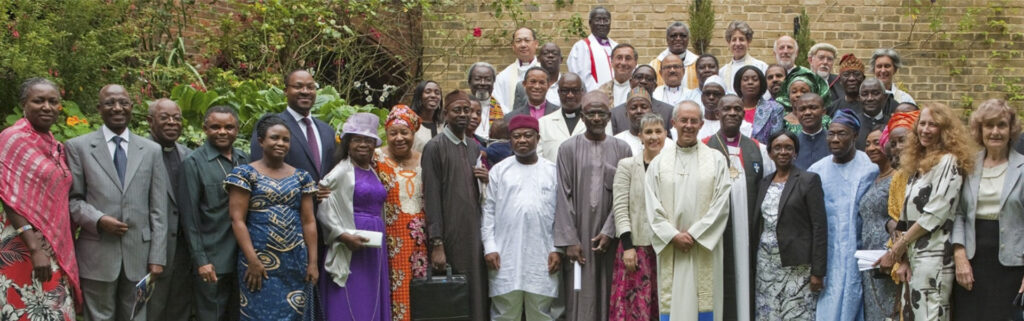
We don't charge membership fees.  (We're always grateful for donations, but how much you contribute is up to you, and entirely private, except for that letter once a quarter or so providing you with the necessary information to legally claim a tax deduction.)  There's plenty of ceremony in a typical Anglican church, but we don't have secret initiation rites or anything scary or sinister.  We don't even have a dress code - people normally dress tidily for church, but you don't have to wear a suit or a big flowery hat. The only ones with a dress code are the ministers, who still wear 3rd century Roman versions of business suits (white robes and colored silk accessories, actually). This is mainly so you don’t need to worry about whether the priest’s pants are too tight or the deacon’s shirt needs to be pressed.


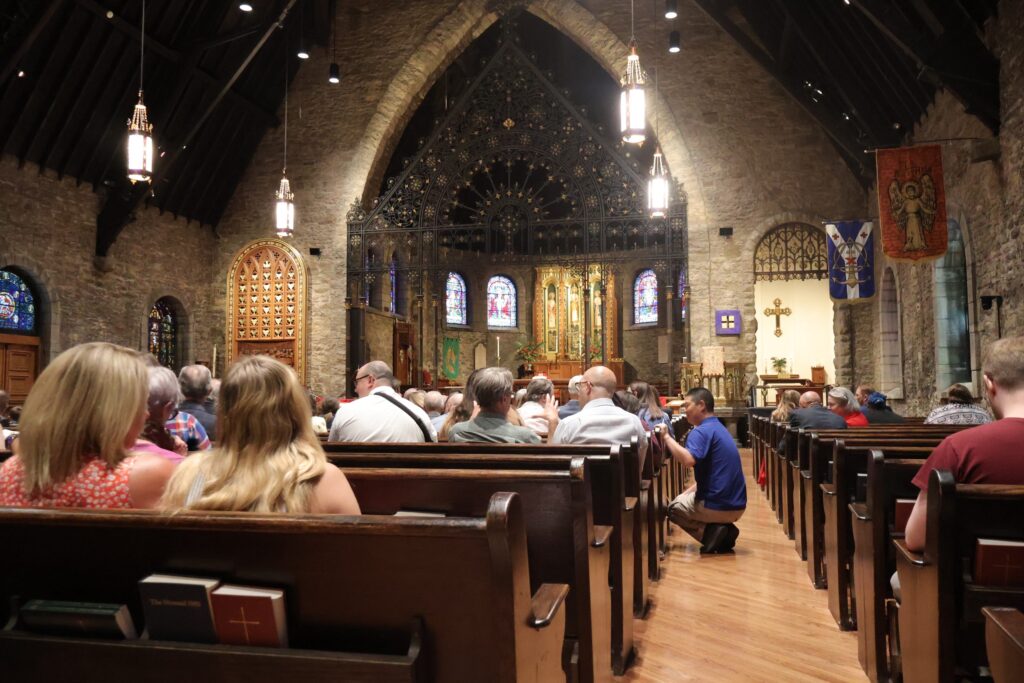
Audience participation in an Anglican service isn't particularly strenuous.  The words of the service are provided in the Book of Common Prayer and the Hymnal.  If you're not familiar with the service, just sit near the back and do what everyone else does.  You can stay in your place when people go up to the altar for Communion, if you aren’t a Christian or don't want to take part in this section of the service. The Book of Common Prayer, for the spoken parts of the service, is red, and the Hymnal, the sung bits, is blue. If you’re confused, relax. It isn’t about understanding, but experiencing, what’s going on. These folks are doing and saying things that have proven very spiritually significant for hundreds of millions of people over many centuries in every corner of the world. They’re joining in a prayer that’s been going on pretty much 24/7 for about 2000 years. Join in as you feel comfortable, and don’t worry about what is confusing. Everyone else in the room has been just as confused at some point, and has come to feel profoundly enriched by what they learned to appreciate through time. 


1: What do Christians Believe?

There are two important parts to Christian belief.  Firstly, Christians believe in a God who is an all-powerful intelligent being, existing independently of the physical Universe, and responsible for its creation. The technical word is that God is a “person,” but maybe “personality” is better for modern ears. God isn’t a Force, like in Star Wars – but God also isn’t a human. There’s an intelligence, a character, to the Deity. We believe that God cares deeply about the Universe and all of its inhabitants. This belief is common to many major religions. Jews, Muslims and Christians all worship the same God, in different ways.


Secondly, Christians believe that Jesus of Nazareth (c. 6 BC to AD 27) was a manifestation of God on Earth as a human, and that His teaching as recorded in the Bible is therefore a direct insight into God's wishes for humanity. This part of our belief is distinctive to Christianity. We believe that Jesus’ death on the cross somehow, we’re not sure exactly how, gives us the opportunity to be reconciled to God, one another, and our selves. And we believe, through Jesus’ resurrection, His rising from the dead, that we have somehow been offered the opportunity to live a reconciled life in the assurance that nothing will ever again separate us from God.   


Lots of people have claimed to be gods.  Why do Christians believe Jesus really was?

There are several good reasons.  Firstly, He taught a path of self-denial and caring for others, and followed these teachings Himself, and as a result He was executed by the Romans.  This is hardly the behavior you'd expect from a person claiming to be the Ruler of the Universe, unless He was telling the truth. Most people who think they’re God call on others to serve them, and allow others to suffer on their behalf. Think of Jim Jones. Jesus did just the opposite.


Secondly, He was clearly not what people expected. The Jewish people of the time had prophecies concerning a Messiah, but they were expecting an earthly ruler, who with God's authority would kick out the Romans and make Israel great again.  Jesus was not at all what they were looking for. And yet - without once commanding an army or any material wealth - Jesus became the most influential person in recorded history.


Finally, Jesus rose from the dead shortly after His execution, and appeared to hundreds of his followers before returning to God. Whether you believe this or not depends on how much weight you give to these eyewitness accounts, and to the simple fact of Jesus’ continuing, dramatic influence on history through the people who had known him. No one at the time was able to explain why Jesus’ tomb was empty, but no one attempted to deny it either, not even Jesus’ enemies and opponents. Why it was empty is a question of faith, either in the Christian message, or faith that the Roman authorities were inept at executions, or faith that the Disciples were particularly clever con artists. Frankly, those last two possibilities are no more scientifically plausible than the Christian claim…      


So what did Jesus teach?

Jesus came to reinforce and improve people's existing relationships with God.  His main commandments were to worship God, and to care for other people.  He said that God has very high standards - but that God understands that we usually can't live up to them, and loves us nonetheless.  God is always willing to forgive, and let us make a clean start, as long as we keep trying.


Jesus said that the God who created the universe, who knows the position and state of every subatomic particle, also cares deeply about individual humans, and wants us to love Him and live fulfilling lives in accordance with good moral principles. Christians believe that when Jesus became a human, He opened the door for us to become more closely connected with God.  And no, we do not actually know how. Anglicans generally enjoy wrestling with complicated theological and philosophical concepts – but we also have a long tradition of suspicion when someone claims that “my answer” to a huge, mysterious question is the only possible answer. The human brain isn’t really big enough to fully exhaust the mystery of God’s purpose, after all.    


Where does the Bible come in?

The Bible is the record of humanity's gradually increasing knowledge of God, culminating in the Gospels - four accounts by different writers of the life of Jesus. Most of it was written hundreds of years before Jesus in Hebrew by Jewish authors. That part, the Old Testament, talks about God’s creation of the world and how He made His presence known to the people of Israel. The parts about Jesus and His followers, the New Testament, were written during the first generation or two after His death, in Greek. Fairly soon after the end of Jesus’ life, by 120 AD at the latest, the tiny, persecuted Church had decided which books and letters were part of the Christian Scripture. No, despite what you’ve heard, no one ever “cut out” books from the Bible. Some manuscripts were circulated but rejected because the Church just didn’t find them useful. The Church wasn’t strong enough to suppress or hide anything—in fact, it was an illegal movement with no power at all. “Lost Gospels” pop up from time to time, but they were lost because early Christians didn’t find them convincing enough to make copies and read them, but rather stuck them on the back shelves of clergy libraries and forgot about them.


Is every word of the Bible true? 

Do Christians believe that the Earth was created in seven days?

Well, yes, the Bible is true. That doesn’t mean it’s necessarily accurate in some historical or scientific sense, because it isn’t about history or science, really. And some Christians believe things like you describe, but this is not a common view in mainline churches. Most Episcopalians tend to believe that God created the world, and that the details as described in Genesis may be spiritually profound poetry rather than geological statements.


Christians believe that the Bible was inspired by God.  However, different parts of it were written for different audiences and not all of it is intended as literal history.  Anglicans take the teachings of Jesus, as recorded in the Gospels, very seriously indeed. The Anglican position is that the Bible is the divinely inspired Word of God, and contains all that is necessary for salvation. Which doesn’t mean that everything in it is necessary, or that things found outside the Bible are untrue and useless. It just means that the Bible answers the question of how to be saved from the brokenness of this world, mainly by pointing to Jesus’ own teachings and example.  We take the Bible very seriously—we just don’t necessarily take it literally. It means what it means, but like any good piece of poetry or oratory or advice, what it means may not be precisely what it says. 


Is Christianity incompatible with science?

No.  It can't be, because science is a self-correcting method of finding truths about the Universe, and we believe that Christianity is one of these truths.  As a general principle, science tells us ‘what’ and ‘how’ and religion tells us ‘why’. And just for the record, some of history’s greatest scientists have been Anglicans themselves, including Isaac Newton, and didn’t think their faith conflicted with their day jobs.


What about life after death?

Christians believe that human consciousness doesn't cease when we die.  We don't know what Heaven is actually like; it's probably something well beyond our current capacity for understanding.  We believe that we will have a permanent existence in the presence of God, in a form fuller and richer than our current physical one. And yes, we believe too that some people choose to live separated from God’s goodness, maybe even through eternity. That’s called Hell. But we’re not very interested in Hell, since most of us are busy trying to live in God’s grace now and in the future. And we certainly don’t claim to know what anyone else’s future address will be – that’s God’s business, not ours. You won’t hear “this group or that group is going to Hell” in an Episcopal Church.


What is the Trinity?

The short answer is; we don't know. It’s a way to describe how we have experienced God through the centuries. Christians see God as having three aspects; God the creator, Jesus of Nazareth, and the Holy Spirit, God interacting directly with human beings. We do not believe that God is a sort of committee; the idea is more that a single God appears in different forms for different purposes. In the past, theologians have attempted to explain and codify the idea of the Trinity, but in fact it's something which we don't fully understand. Try this on for size: God is love. And love unites perfectly, but doesn’t swallow up differences – like marriage is supposed to be and too rarely is. So God is perfectly united, and completely distinct, like a perfect marriage. If that doesn’t work for you, we can certainly recommend several thousands of pages of theological treatises.  


2: What about the Anglican Church?

Anglicans worship in 164 countries worldwide.  Anglican Churches are organized along national or regional lines (Church of England, The Episcopal Church USA, the Church of West Africa, etc), all of which have a good deal of autonomy, but recognize the general spiritual leadership of the Archbishop of Canterbury in England. Anglicans talk to each other via a body called the Anglican Consultative Council, and all Anglican bishops come together at the Lambeth Conference, held every ten years or so.


There are many differences between individual Anglican churches, but we hold four things in common:

  • The Bible as a basis of our faith;
  • The Nicene and Apostles' Creeds, basic statements of Christian belief;
  • Recognition of the sacraments of Baptism and Holy Communion, and
  • The historic episcopate; that is, the continuity of the line of bishops since the time of Christ.


Anglicans generally believe that the Bible contains what we need to know about salvation,  that the way to understand the Bible is use the Creeds as tools for interpretation (although the Creeds are more interested in our avoiding some particular mistakes than in binding us to a particular position), and that through baptism and communion we actually are given some direct, personal connection to God through Jesus Christ. We also believe that a common kind of Church structure is helpful and that the ancient structure which ties many congregations in a region together under the oversight of a bishop is a wise and godly one. 


It has been said that the Anglican Church rests on the three -legged stool of Scripture, reason and tradition. The unique strength of Anglicanism lies in our attempt to balance these three ways to understand and experience God. Another important Anglican ideal is the “via media,” a spiritual discipline which avoids extremes but attempts to embrace what is best in all Christian traditions.


Wasn't the Anglican Church formed by Henry VIII so he could annul his marriage?

Ouch. This isn’t one of our prouder moments. Henry certainly did begin the process that would lead to Anglicanism’s establishment as an autonomous body, but he himself would probably be very ill at ease with the Church that took shape in the generations after his death. Leaders in the Church of England took the opportunity offered by Henry’s private soap opera to make a number of reforms which the central authorities of the Roman Catholic Church opposed. This was only fully completed under the reign of Henry’s third successor, Elizabeth I. Something like the Anglican Church would probably have happened without Henry VIII’s political interference, but it might have taken longer. What is unique about our tradition is how much of the medieval catholic tradition we retained while still accepting so much that was good from the European Reformation. Elizabeth I strove to help her kingdom find a “via media,” a middle way, in religion, a way which would respect the godly traditions of the past but still be open to the new insights of thinkers who were struggling to recover a more personal, Bible-based, approach to God.     


So what else changed?

At the time, there were a number of doctrinal concerns, such as the exact nature of the Eucharist. The main practical difference between the Anglican and Roman Catholic Churches nowadays is that the Anglicans, while maintaining a hierarchy of priests and bishops, give much more autonomy to individual churches.  It might be easiest to imagine us as a democratic variant of Catholicism – the average person in the pews has a great deal of  freedom to form their own opinions on how best to live out the Christian faith, and most clergy, even bishops, have checks and balances on their authority.  


Is the Anglican Church male-dominated?

It's trying not to be.  Women have been ordained as priests in some parts of the Anglican world since the 1940s, and in the USA since 1976. Currently, something like a third of our priests and bishops are women, a number which is growing with every year. Some traditional hymns and forms of service do contain male-specific language which can't be removed without damage to their poetic quality.  We still often (but not exclusively) refer to God as ‘He’ and ‘Father’, but that doesn’t mean that we believe God is somehow male, or that women are in any way spiritually inferior. The English language has no suitable neutral terms other than the horribly impersonal ‘it’, and the God of Jesus is anything but impersonal.  


3: What Happens in Church?

The core of Anglican worship is Holy Communion, also known as Eucharist.  This is a ceremony derived from the supper which Jesus held with his followers on the night before his arrest and execution.  Christians believe that this ceremony creates a special sort of contact with God, which helps to strengthen us as Christians.


What actually happens at Communion?

Holy Communion involves the giving out of bread and wine which has been consecrated, or made holy, with special prayers.  In some parishes real bread is used; ours uses thin crackers or wafers, because many of our members prefer to let the cup-bearer dip the bread in the wine rather than drink from it. Wafers don’t dissolve as quickly as regular bread. Normally one walks up to the front of the church and kneels at the altar, receiving the bread from the priest in cupped hands. If you can’t kneel, stand. If you can’t walk, let the ushers know and the ministers will come to you. The chalice, the ceremonial goblet containing the wine, is brought around for you to drink from, or to dip.


Won't I catch horrible diseases from sharing a cup?

No. Alcohol is a disinfectant and the rim of the chalice is wiped between uses.  The Center for Disease Control in Atlanta researches this question every so often, and has never yet confirmed a case of anything, even the common cold, being spread by common cup communion. It’s worth remembering that Jesus told us to “do this” while holding onto a cup that he then passed around. He didn’t say “do something similar to this.” If you are concerned, you can hang on to the wafer and let the chalice bearer dip this into the wine instead of drinking directly from the chalice. Shaking hands or opening the door to a public building is riskier than communion.  


Does anything weird happen when you receive Communion?

Mysterious, yes. Weird, no. Some people do have mystical experiences, but they are not a normal part of Communion in most churches.  (Some branches of Christianity actively encourage them; the Anglican Church tends to be suspicious of this sort of thing when it happens in public. Our rule of thumb is that anything that attracts too much attention to the individual might finally be about the individual rather than about God. But if you have mystic experiences in your prayers, relish the gift! Just don’t make it so everyone else has to stop praying and pay attention to you…)  In general, Communion strengthens your relationship with God in the same way as you can get to know people well by spending a lot of time with them over many years.


Can anyone take part in this ceremony?

You have to have been baptized in order to receive Communion.  It doesn't have to be an Anglican baptism; any branch of the Christian Church will do. And we don’t worry much about how much water (a thimbleful works as well as a swimming pool) or the age at which it happened. The Christian Church is supposed to be a family, and this is the family’s meal together. Some members of the family were born into and can’t remember a time when they didn’t take part; some were adopted later and distinctly remember their baptism and first communion. What matters is that the family is together, not how you got there!


Will I go to Hell if I don't receive Communion regularly?

We sincerely hope not!  Holy Communion, like most of the Church's activities, is a means to an end rather than an end in itself.  The Episcopal Church believes that Communion is a valuable component of our relationship with God. God, we believe, is more interested in getting us to Heaven, whatever that is, than in consigning us to Hell.


What else happens in a church service?

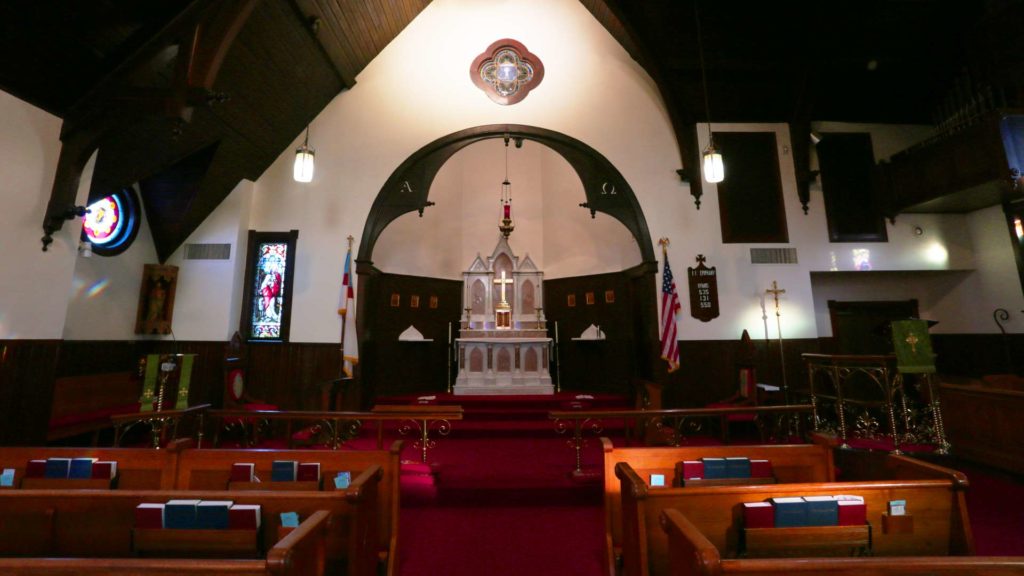
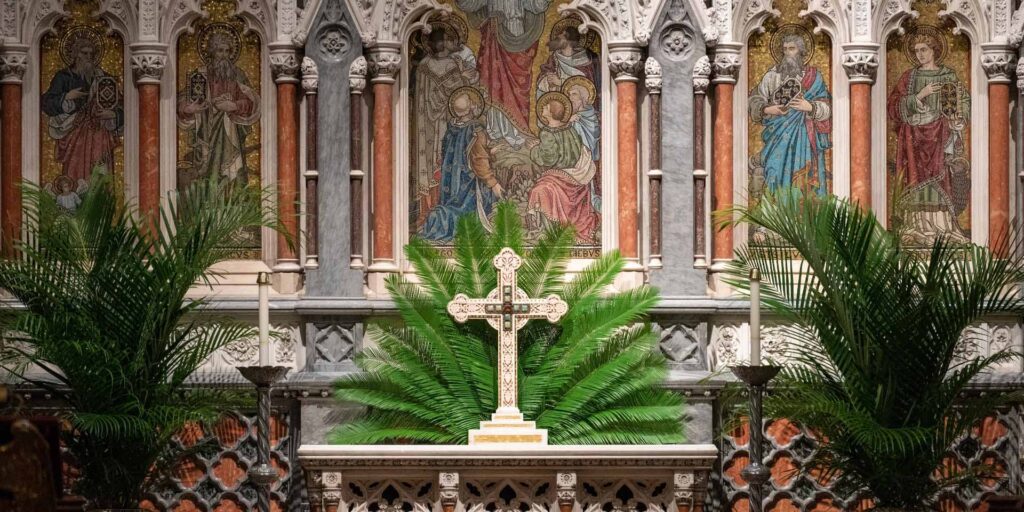
There is much variation in style between individual parishes, and some parishes use different services on different Sundays. Grace Church is what is commonly called “High Church,” which means rather old-fashioned in our musical style (think Bach, not Southern Gospel), with a fairly choreographed bit of drama going on up front among the ministers and assistants. There’s more than just a bit of bowing, kneeling and making the sign of the cross, and on special occasions, we even light up a bowl of incense. All of that has ancient roots and spiritual meanings, but none of it probably matters much to God. The ceremonies are primarily there because they matter to the congregation, helping us to remember that we’re part of something bigger and more universal than our own daily, mundane, 21st century American concerns. We’re joining in a prayer that’s been going on, almost nonstop, since shortly after the Resurrection! Grace Church has chosen the “High Church” tradition because we are aware that fads come and go, but that roots are important to the modern world, where all too often there is little awareness of, let alone connection to, where we come from. The other styles of being Anglican, “Low” and “Broad” and “Charismatic,” are also part of our ethos, and perfectly lovely. They just aren’t our particular preference, on the whole.


There are specific words to accompany Communion, and the Lord's Prayer will normally find its way into a service.  There will often be a Creed, a formal statement of basic Christian beliefs.  Most services include hymns, which may be either traditional or modern.  There will be prayers; some of these will be in set words, but we also pray about current issues.  Services also include a series of readings from the Bible: it’s worth pointing out that the typical Anglican service has three or four major chunks of Bible read out loud, which begs the question why so many people think we don’t take the Bible seriously. 


And a sermon?

Quite often. We're fully aware that sermons have a reputation for inducing sleep.  This doesn't have to be the case.  Some preachers are very good speakers, adept at making Christianity relevant to everyday life. Even if they’re not, Anglicans generally like sermons that are about the same length as an episode of Sponge Bob Square Pants rather than the Superbowl… And since one of the typical excuses for not coming to Church is that “it’s my only morning to sleep in,” one might consider a long, dry sermon a bonus!


And . . . ?

Yes, we admit it. There will normally be a collection. We need to meet running costs and pay salaries, and we are also a major social service organization. No one will pay attention to how much you're dropping in the basket, and you don't have to make a contribution at all. If you see any value in what we're doing, you'll probably want to help if you can.


Why do priests wear funny clothes?

Like many of the details of our worship, this is a historical accident. A priest's robes are based roughly on the garments worn by Roman officials in the early days of the Church. We've added Christian symbols to them, but (being Anglicans) we haven't actually changed anything much. The backward collar and black shirt worn most weekdays were actually shockingly new-fangled when introduced in the early 19th century. Then they were a kind of hip “dressing like the common man with a twist” outfit—but after two centuries, they’ve fossilized a bit themselves. But at least you know at a glance who’s supposed to have the answers to the question you’ve been dying to ask…


4: Where do I Go from Here?

Newcomers are always welcome at any Episcopal church.  There are no membership fees, we won’t insist on a check-list of things you must agree to, and you don't have to fill in any forms.  Anyone can attend any service and see what happens.


Where and when?

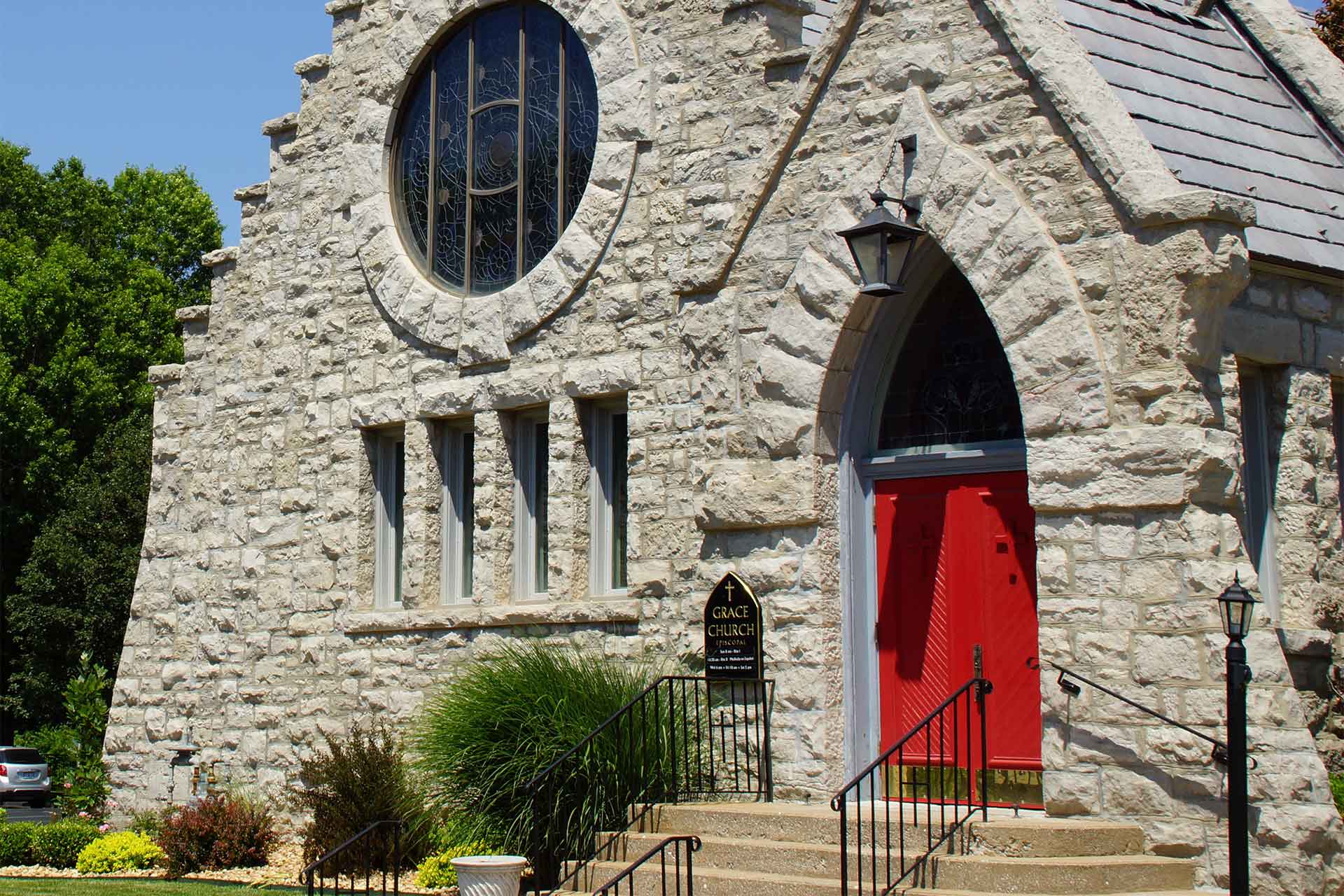
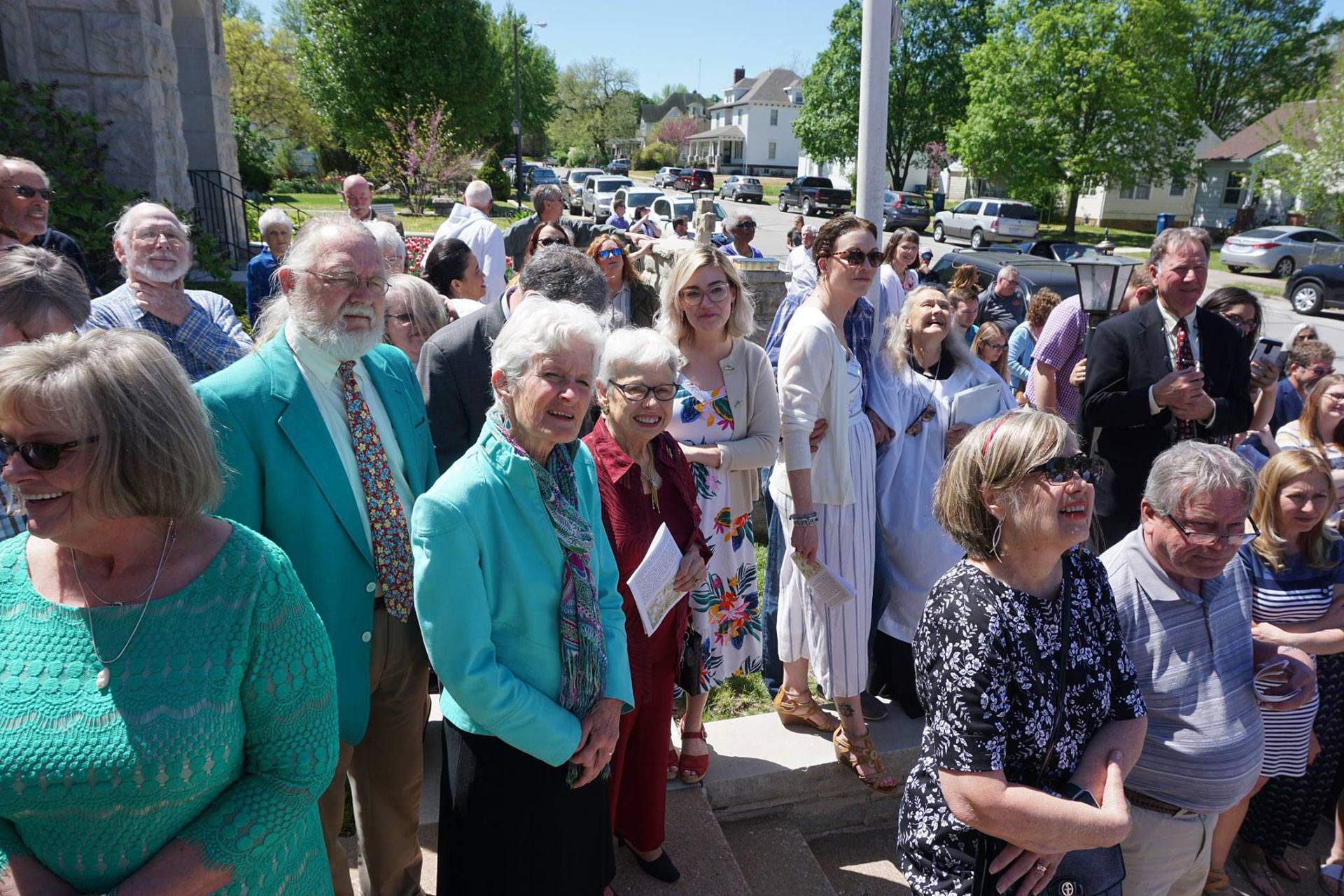
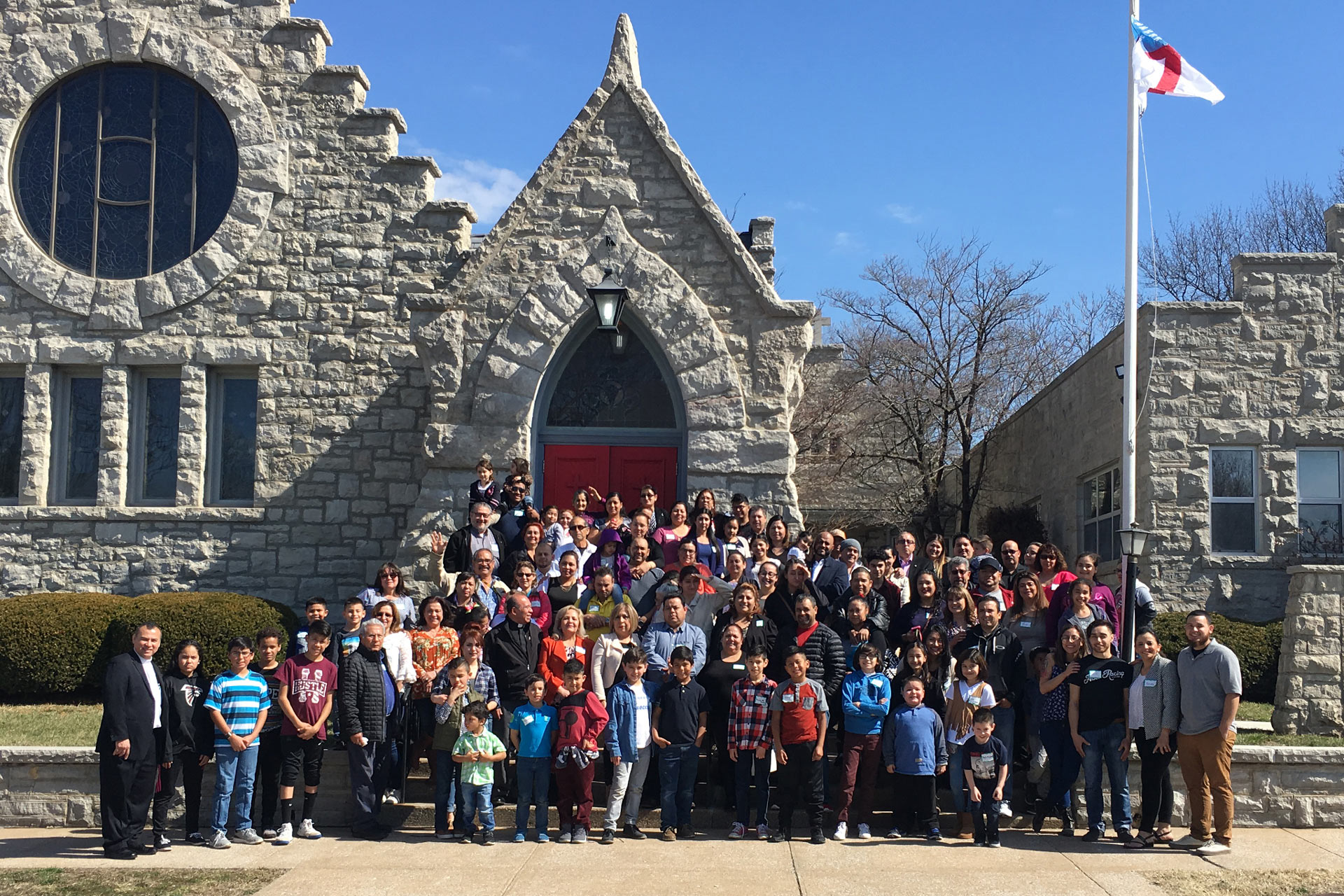
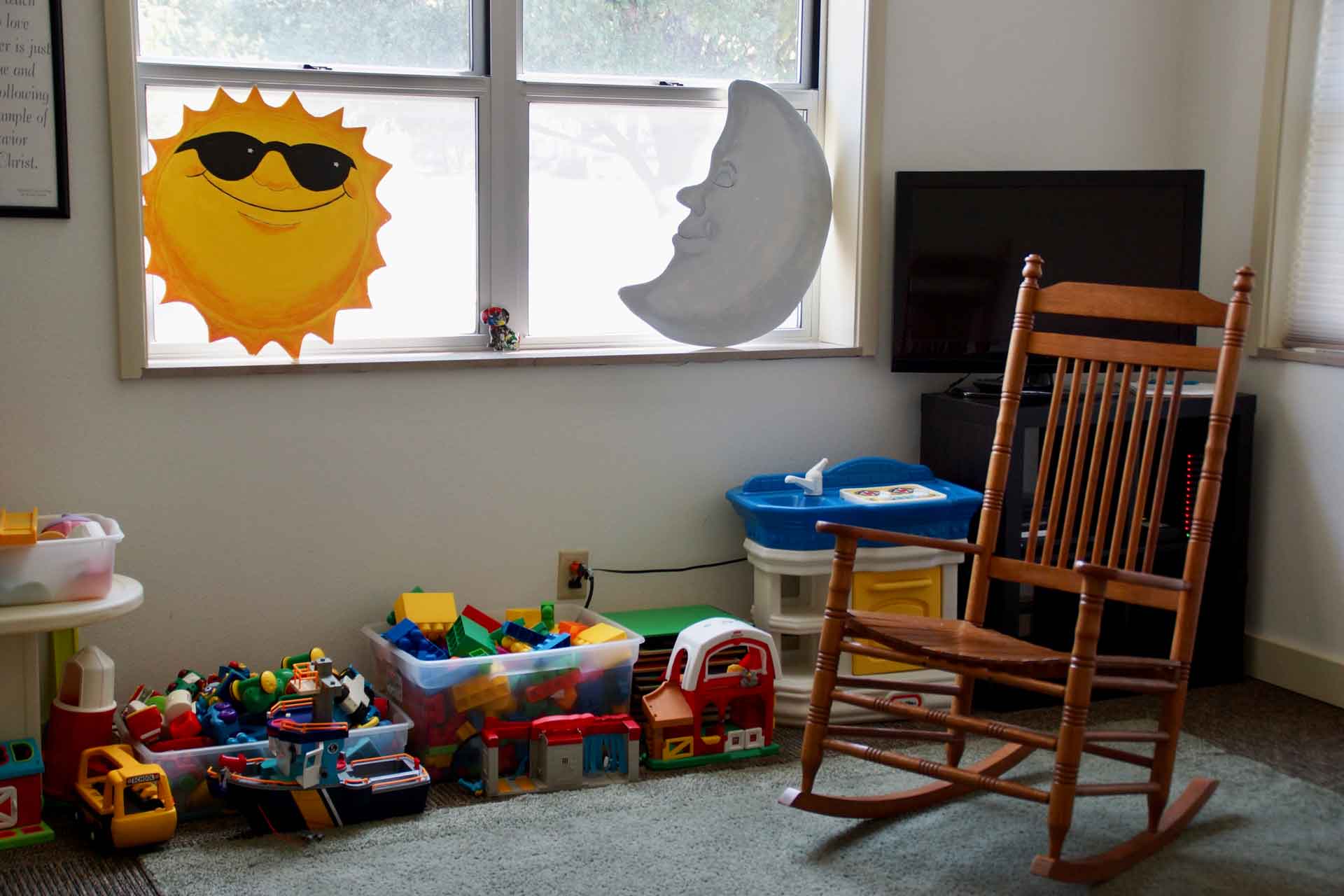
Corner of Chestnut and Howard in Carthage, 2 blocks east and 3 south of the famous Square, Grace Church is the oldest “Carthage marble” public building in Carthage. Come in the red doors - all other doors go to office, educational or fellowship space. Handicapped accessibility is from the north side parking lot - go up the ramp, turn  in the door. The hall dead ends ahead – if you turn left, you’ll go to the nursery and handicapped restroom. Go through the door slightly to the right and into the big fellowship space. On your right is a ramp at the far end of the room into the Church proper. To the left is the kitchen (and the coffee pot steaming seductively – help yourself, cups are below). More restrooms ahead on the right, slightly hidden behind the wall with the display of historic silver and books. 


Grace Church, except around Christmas and Easter when there are a lot of special services, pretty generally follows this schedule:

  • Sundays at 8 (traditional language), 10:30 (modern language), and noon (Spanish), with Sunday school at 9:15 and coffee fellowship at 11:30ish
  • Wednesdays at 6 pm (rather casual, followed by dinner, youth groups, young adult group and adult Bible study)
  • Thursdays at 2 pm (St Luke’s Nursing Home).
  • Fridays at 10 am (traditional language).
  • Saturdays at 5 pm (seasonal—we usually take off for the coldest, darkest months of the year so no one slips on the frozen, dark steps and because the clergy like to tuck into a nap after hiding all those Christmas gifts they’ve been buying the family) 


What if I like what I see?

There are two ceremonies relevant to becoming a fully functional Episcopalian.  The first is Baptism, and the second is Confirmation. Baptism is a ceremony representative of spiritual cleansing, ‘renewing’ a person upon entry into the Church. Originally the recipient was fully immersed in water; a modern baptism usually involves pouring water over the head, and special prayers. Adults can always be fully immersed if they like, although that requires scheduling the use of the pool at the YMCA.  Some people are baptized as babies.  This is an indication that the parents have decided to bring up their child as a Christian. In this case, people can be Confirmed when they are old enough to make their own decision to be part of the Church.


You can take part in most of the activities of the Church without going through either of these procedures, and there are no rules about how soon, or how late, you should make a formal commitment. It is required to be baptized to do some things, and to be confirmed in order to do others, mostly ones that involve leadership tasks in the congregation. Talk to your friendly parish priest about it some time. If you’re coming from a different Christian congregation, Episcopal or otherwise, we will write a “letter of transfer” for your formal membership.


What can the Church do for you?

The Church can bring you closer to God.  We believe this is more important than anything in ‘ordinary’ physical existence.  It can also help teach you to become a better person by living in a more ‘God-like’ way.  The Church answers the human need for something greater than themselves in which to believe, and gives our lives a sense of meaning.


The Church also provides community with fellow humans, all working towards a common goal. There will be times in your life when you simply don’t have the inner resources to deal with the hardships and temptations of your life: a community of people who are motivated by the same ideals and working together on can be invaluable.


What can you do for the Church?

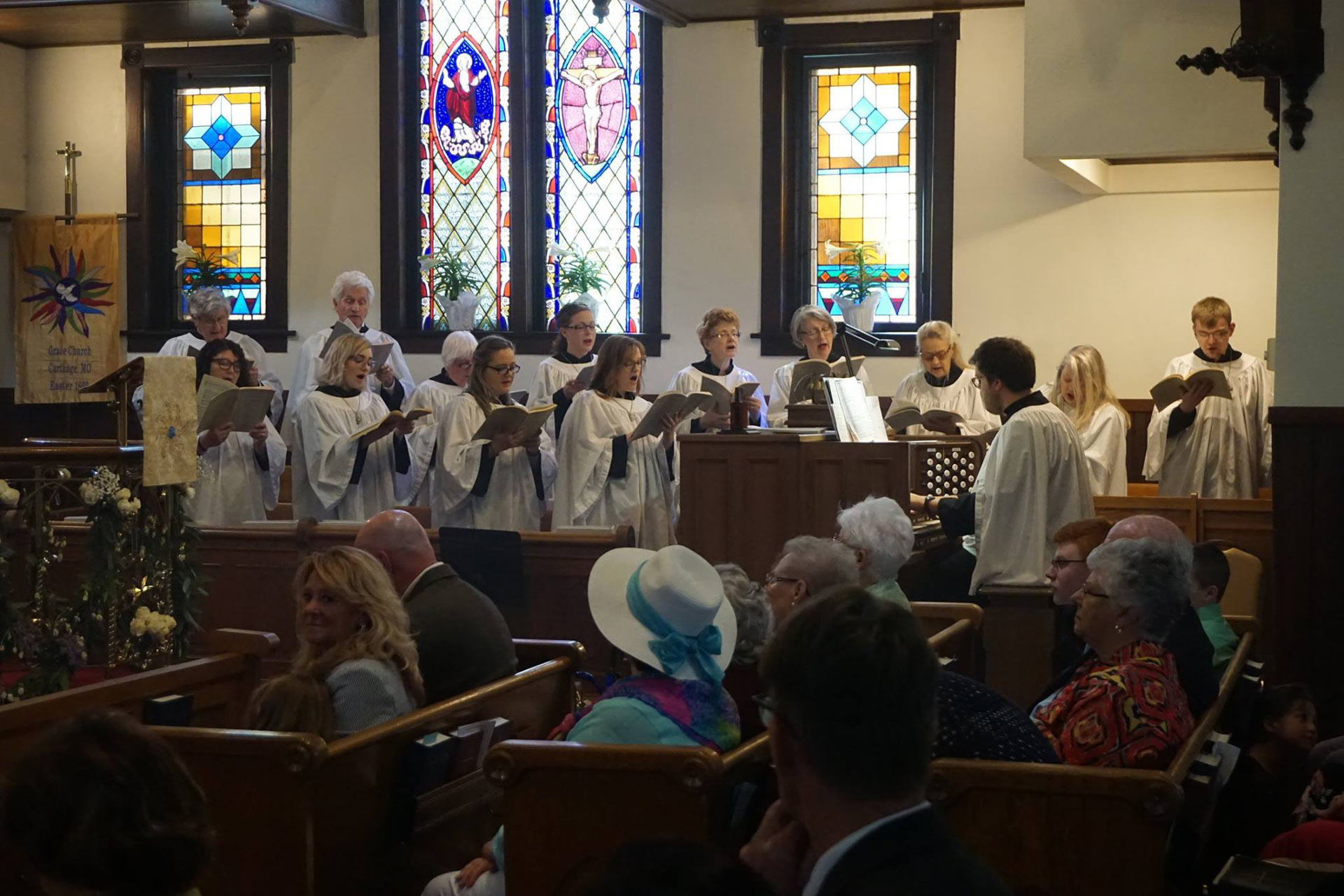
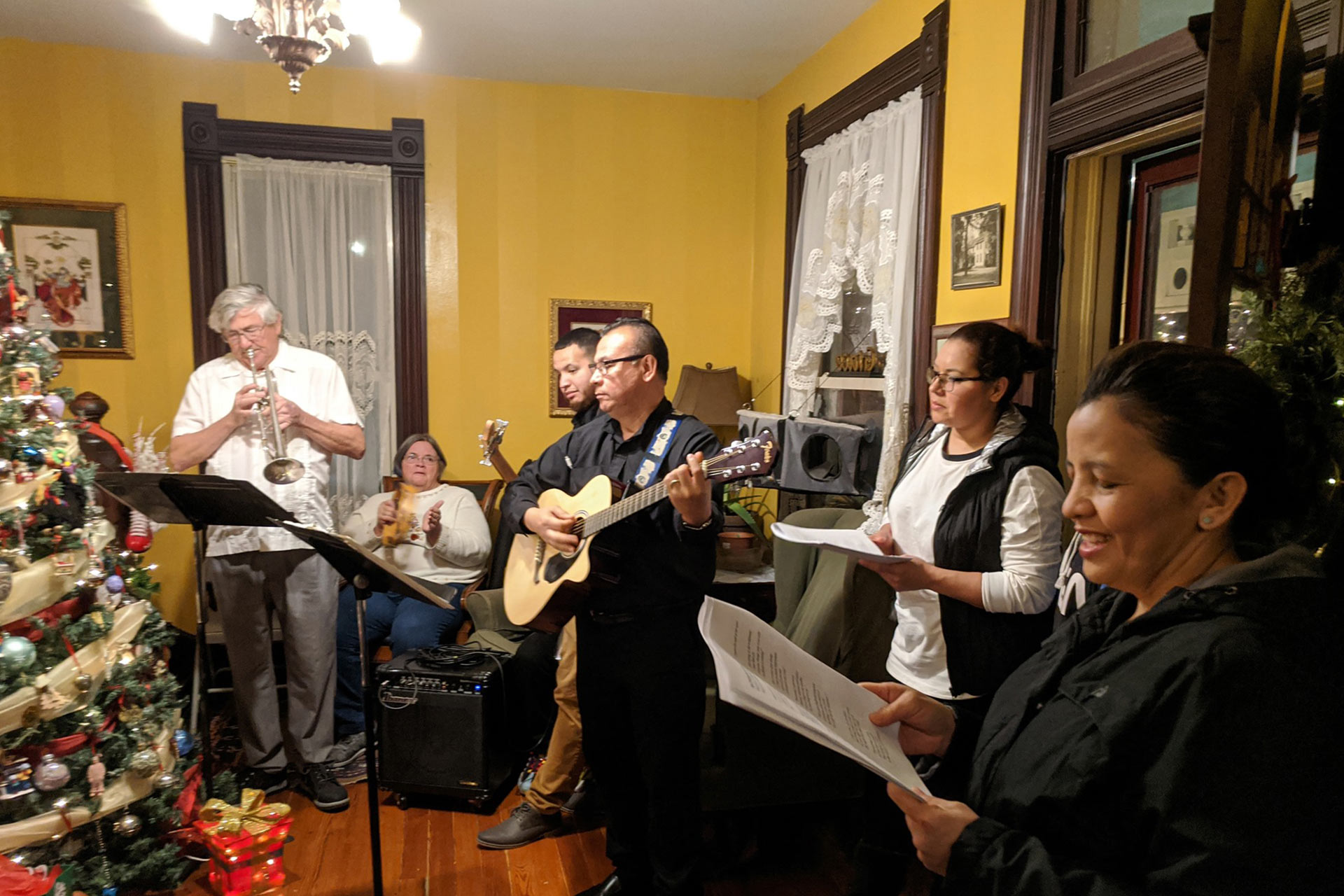
Many Christians become involved in the life of their Church in ways other than simple attendance. Our church has a fine adult choir, excellent youth programs for all ages on Wed and Sun, Bible studies, young adults fellowship, a quilting group, women’s guilds, a consignment shop, ministry to the Hispanic community and local (Episcopal Church owned) nursing home, and a very strong involvement in the community. Contact almost any local social service organization and you’ll find a pack of Episcopalians in the middle of it, serving God by serving their neighbor. There’s also ordination as a priest or deacon, although frankly, that is a multi-year process of prayer, study and group consensus at several levels.
However, all Christians have a part to play, using their own individual talents in their everyday lives to further the work of the Church and bring the world a little closer to the way God wants it to be.


© 2000 - 2012 powered by
www.doteasy.com